Saturday, August 15, 2015

CONGA


Peru’s Conga Mine Conflict: Cajamarca Won’t Capitulate
Written by Lynda Sullivan   
 
The fight over the Conga mining project is one of Peru’s largest current social conflicts. Today, the local population continues resisting the imposition of one of Latin America`s largest gold mining projects – Minas Conga. The situation remains tense, and the resistance continues, but with an intensified sense of urgency because as the battles are won and lost, many feel that the conflict is nearing its conclusion.

The struggle against the Conga project has been a long and arduous one already (1). To summarize, Conga is a 4.8 billion dollar project of Yanacocha – a company which combines the interests of Newmont mining corporation (US-based), Buenaventura (Peru) and the IFC of the World Bank. It aims to destroy the head of the water basin for the province of Celendin, and in part that of neighboring Cajamarca and Hualgayoc, leaving severe water shortage and contamination. This would prove disastrous for the mainly rural provinces of the region of Cajamarca, in the northern highlands of Peru, where the majority of dwellers live by agriculture and cattle rearing.  It would be an aggressive open pit mining project, an Earth-destroying technique that Newmont itself initiated in the early 1960s (2), and similar but more expansive than Yanacocha`s previous work in Cajamarca. For this the population rejecting the project have a fair idea of what is in store – all they need to do is look next door to the devastation that 20 years of open pit mining has left in its wake (to see more about the particulars of this devastation please see the aforementioned article).

The campaign against the project is growing stronger, constantly renewing itself as the pressure crushes the spirits of some and makes space for others. The struggle doesn`t belong to any one person, or any particular high-profile figure, as the mass media would have you believe, rather the struggle is of the people, and for this it remains strong. Though it is this very fact that has led to an intensification of the repression and criminalization of the resistance – as the government and Yanacocha become ever more desperate to push the project through 'by blood and by fire' (3).


(My translation of Cossio's comic appears in Revista Hiedra - Spring 2015)


International Uchronia

Alternate Pasts: An Introduction to International Uchronia

In 1995, Stanley Asimov compiled excerpts of his older brother’s correspondence in a collection titled Yours, Isaac Asimov. This assortment of more than a thousand fragments of letters not only spans several decades, but also, as one can imagine, covers a wide array of topics ranging from personal relationships with prominent people such as Carl Sagan, Kurt Vonnegut, Arthur C. Clarke and a host of others, to the inner workings of the publishing world, science fiction fandom, and meditations on decidedly more metaphysical themes. Among the many fascinating missives is an exchange between Asimov and one Martin H. Greenberg in which the writer wonders if his correspondent was the same person who he claimed had stiffed him after the publication of the Foundation Trilogy and I, Robot. The response from Greenberg reads in part:
I am not what I appear to be! I am (in no particular order), 32 years of age, male, overweight, a college professor, a science fiction fan and editor of science fiction anthologies. We met at the Nebula Award banquet in New York in April, but only for a few minutes. I am, definitely, not the Martin Greenberg of Gnome Press, but rather Martin Harry Greenberg, son of Max Isador Greenberg of Miami Beach. Could you supply me with any estimates of the odds involved in there being two people named Martin Greenberg who edited, but did not write, science fiction?
The pair wound up getting along famously after that initial correspondence—Asimov would subsequently refer to Greenberg as “Marty the Other,” and they would chat on the phone almost on a nightly basis for the next nineteen years. Asimov even went on to make the following laudatory remark about his friend, “Marty Greenberg, for my money, is the best judge in the world where science fiction is concerned.”

It goes without saying that Marty the Other could be considered a rock star in the world of speculative fiction, especially for his work as an editor and publisher of more than 2,000 books and one of the founders of the Sci-Fi Channel (now known as SyFy). He is the kind of figure that every sci-fi enthusiast should know about, which is why I was so utterly mortified the time I was asked if I had heard of him and had to respond negatively. It happened roughly five years ago on my campus at the University of Wisconsin-Green Bay while giving a faculty forum presentation on the works of Peruvian playwright and short story writer Juan Rivera Saavedra. During my talk I briefly summarized Rivera Saavedra’s major works, which included Cuentos sociales de ciencia-ficción, one of the seminal collections of Latin American sci-fi microfiction. Spurred on by my mention of this anthology, my colleague, historian Clifton Ganyard, approached me at the end of the Q&A session. After geeking out on our favorite novels and films and our shared fondness of Salman Rushdie’s story “Chekov and Zulu,” I told him that one of my goals was to publish an anthology of Latin American fantasy, sci-fi and weird fiction in translation. He responded, “Have you heard of Martin Greenberg? I’m sure he owns the Guinness Book of World Records title for editing the most books! He’s a huge sci-fi buff and also used to be a professor at UW-Green Bay, but retired a few years back. You should contact him.” The name rang a bell, but I truly couldn’t place this “anthologist extraordinaire.” “Take a look at your bookshelf when you get home. You’re bound to have something Martin has published,” Clif concluded as we left the conference room of the University Union.

That weekend I opened a few boxes of books that had remained sealed from our recent move and sure enough, there were six anthologies that bore the fingerprints and curating of Marty the Other. To be fair, as a grad student I was a stereotypical habitué of secondhand bookstores and amassed quite a library of choice genre collections. And yet I was still embarrassed about not recognizing Greenberg’s name having recently devoured his co-edited anthology Future Americas. Here was this big-time publisher that lived just a few miles from me! I then determined my next step would be to reach out to him and pitch the idea of a sci-fi in translation compendium, but first I needed to decide on a unifying theme for my project. This decision came rather quickly as I had always been a voracious reader of one subgenre of speculative fiction in particular: uchronia—otherwise known as alternate history, allohistory, counterfactual or what-if. These types of stories present the reader with divergent timelines and imagined variations of key moments in the past which lead to intriguing conclusions about our historical beliefs and practices. Uchronia is a narrative mode that has enjoyed both critical recognition and popular acceptance throughout literary history. Notable examples include works such as the Hugo Award-winning The Man in the High Castle by Philip K. Dick, a story set in an alternate post-Second World War era in which the Axis had been victorious; Farthing by Jo Walton, a Nebula Award-nominated novel that imagines a world in which the United Kingdom had ceased fighting against Nazi Germany and negotiated peace prior to American involvement in the war; Michael Chabon’s The Yiddish Policemen's Union, which also won the Hugo Award, takes us to a world in which the State of Israel collapsed after a few months of existence; and even the great master of horror, Stephen King, has dabbled in uchronia with his novel 11/23/63, an alternate history that involves time travel to prevent the assassination of John F. Kennedy. I soon found out that among Greenberg’s vast catalog, he had also published several anthologies of uchronia, including his collaboration with Harry Turtledove, The Best Alternate History Stories of the 20th Century.

Excited at the prospect of potentially working with Marty the Other, I drafted an email sketching out my vision for Cosmos Latinos 2.0, my working title for the project, which was a nod to the spectacular Spanish and Latin American sci-fi anthology edited by Andrea Bell and Yolanda Molina Gavilán. The proposal featured an ambitious mix of excerpts from novels and/or short stories by Bernardo Fernández (Bef), Jorge Baradit, Gerson Lodi-Ribeiro, Jorge Eduardo Benavides, and a rather lengthy etc., etc., etc.

Unfortunately, I postponed sending the message to Greenberg. I was a newly minted PhD on the tenure clock, and was advised by several colleagues both at my institution and at other universities to focus on “more scholarly pursuits” if I wanted to get promoted. Semesters passed, I published a few articles and a book on contemporary Peruvian narrative and political violence, and yet I kept adding to my burgeoning list of Latin American uchronias. I thought I’d eventually get the chance to discuss my ideas with Marty, but sadly that would never be the case. Greenberg passed away in Green Bay in the summer of 2011 after a long battle with cancer. As I read articles in the local press and sci-fi blogs celebrating Greenberg’s life, his generosity and constant mentoring, and of course, his valuable contributions to the publishing world, I couldn’t help but lament the mistake I had made by not connecting with him when I had the chance.

A couple of years later, I was lucky enough to have the opportunity to pitch a Uchronia-themed issue for Words Without Borders: the text you are now reading on your computer, tablet, smartphone or paper (printed on recycled paper, bien entendu). It is a project that was greenlighted seven months ago and ended up involving countless hours of reading (including multiple visits to Robert. B. Schmunk’s invaluable and exhaustive database, Uchronia.net), hundreds of emails, and considerable energy and effort stalking writers and translators on Facebook. In this issue, you will explore alternate histories that deal with a string of famines and other catastrophes in mid-nineteenth-century Sweden that could have obliterated the Scandinavian peninsula in Karin Tidbeck’s “Mine-Wife” (translated from the Swedish by Silvester Mazzarella); how a matinee idol’s accident changes the face of international cinema in Xavier Mauméjean’s “Cinépanorama” (translated from the French by Edward Gauvin); the subsequent transformation of Mexican society after Emperor Maximilian I is not executed in 1867 and Benito Juárez’s brain is digitized by a European psychocyberneticist in Bef’s “The Beast has Died” (translated from the Spanish by Brian L. Price); the picaresque underworld of a female soccer hooligan gang who has been entrusted to transport a reanimated cyborg of history’s greatest soccer star, Lionel Messi in Hernán Vanoli’s “Saint Lionel” (translated from the Spanish by Juan Caballero); how Portugal’s King Dom Luís II escaped to Brazil after the invasion of his country by Franco’s fascist troops in Gerson Lodi-Ribeiro’s “Cousins from Overseas” (translated from the Portuguese by Sarah Ann Wells); St. Francis of Assisi’s peculiar life story as told from the perspective of his nephew Piccardo in Aldo Nove’s “Scandal” (translated from the Italian by Elizabeth Harris); the way Allende thwarted the coup attempt of 1973 and resisted US meddling in Chilean affairs in Jorge Baradit’s “Contreras’s Dream” and an allohistorical Peru in which Shining Path had defeated the armed forces in Jorge Eduardo Benavides’s “Distinguishing Marks: None” (both translated from the Spanish by yours truly, Gabriel T. Saxton-Ruiz).

While some may quibble that not all of the stories in this collection adhere to the strict generic classification of alternate history, they all offer us a new way of perceiving history. Besides, as Chabon once declared:
genre [. . .] is—in a fundamental and perhaps ineradicable way—a marketing tool, a standard maintained most doggedly by publishing and booksellers. […] The most useful way to think of the various literary genres is not as discrete rooms in a house or red-lined sections in a bookstore, but as regions on a map, the map of fiction. [. . .] And as with the regions on a map, on the map of fiction there is overlap: sometimes it can be hard to say where science fiction shades unambiguously into fantasy, or horror into gothic romance, or mainstream literary fiction into any of its neighboring genres.
Or as the familiar saying goes, “good writing is good writing, regardless of genre,” which is certainly the case in this issue. In any event, I believe wholeheartedly that the works assembled in this collection truly constitute a worthy tribute to Marty the Other and his tireless advocacy and promotion of speculative fiction. May these stories transport you to different epochs and places while opening new imaginative possibilities and disparate historical realities. Enjoy and safe travels in time!

Gabriel T. Saxton-Ruiz
Green Bay, Wisconsin
January 1, 2015
 
 
© 2015 Gabriel T. Saxton-Ruiz. All rights reserved. 


Read more: http://wordswithoutborders.org/article/alternate-pasts-an-introduction-to-international-uchronia#ixzz3iw1TcTHx

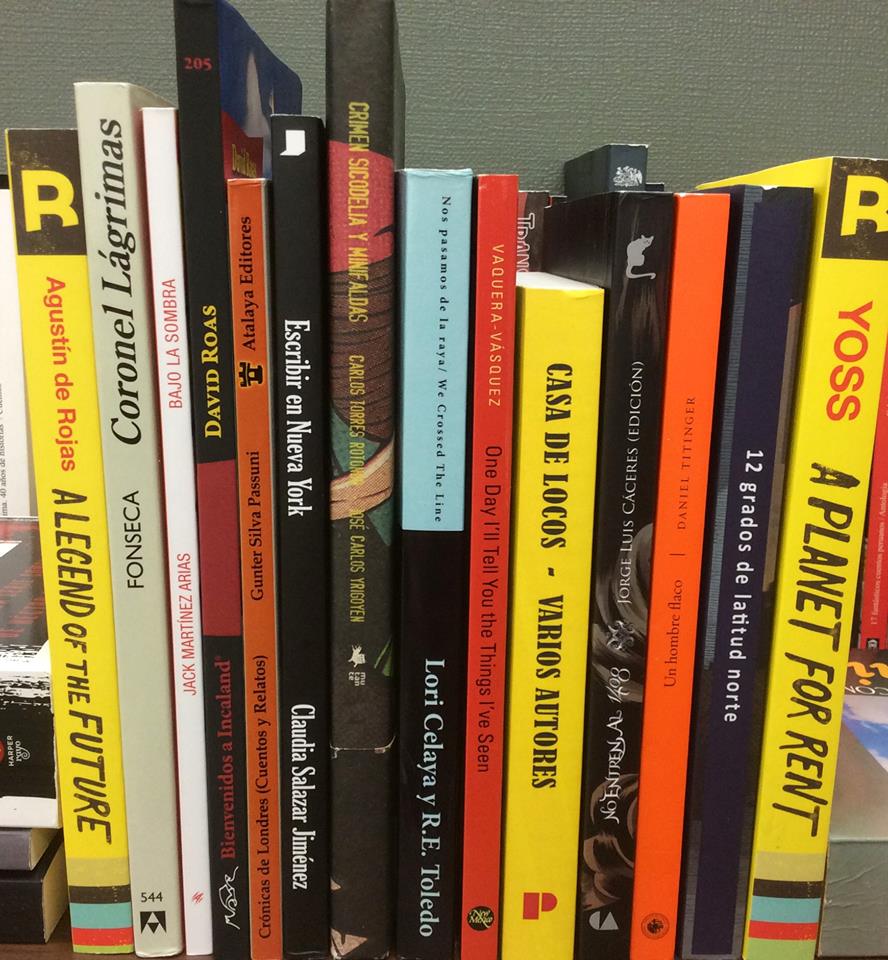
Summer Readings - Lecturas de verano (2015 Edition)


-Augustín de Rojas – A Legend of the Future
-Carlos Fonseca – Coronel Lágrimas
-Jack Martínez Arias – Bajo la sombra
-David Roas – Bienvenidos a Incaland
-Gunter Silva – Crónicas de Londres
-Claudia Salazar Jiménez – Escribir en Nueva York
-Carlos Torres Rotondo & Jose Carlos Yrigoyen – Crimen, sicodelia y minifaldas
-Lori Celaya & Rossy Toledo – Nos pasamos de la raya
-Santiago Vaquera-Vásquez – One Day I’ll Tell You the Things I’ve Seen
-Casa de Locos
-Jorge Luis Cáceres – No entren al 1408 / Antología en español tributo a Stephen King
-Daniel Titinger – Un hombre flaco
-12 grados de latitud norte – Antología de ciencia ficción venezolana
-Yoss – A Planet for Rent

 
Reviews will be coming soon!!

Friday, August 31, 2012

Conflict Resolution? Conflict Prevention...a la peruana!

Conflicts arising from corporate vs community interests are nothing new, yet even today en pleno siglo XXI, we still have not figured out how to address these issues properly.  This short and simple video gets to the crux of the problem: the lack of dialogue and the sensationalized-style of "reporting" from our traditional media sources.

Wednesday, August 29, 2012

La fuerza de lo cotidiano


When Santiago Roncagliolo published a book on Shining Path's leader Abimael Guzmán (La cuarta espada) several critics pounced on the perceived light treatment of such an infamous figure in recent Latin American history – many were especially critical of the use of quotes from Wikipedia and the Star Wars references.
Rodrigo Orihuela sums up the negative opinions regarding Roncagliolo’s work in a review for Argentine newspaper Página/12:
La crítica más fuerte que ha recibido La cuarta espada, sobre todo en Perú, está vinculada a este intento de retratar a Guzmán, ya que Roncagliolo banaliza la figura e importancia del guerrillero. Una frase del libro sobresale como disparador de las críticas, cuando hace referencia a la ideología de los militantes comunistas, y de los senderistas en especial: “El valor casi místico que se atribuye a la ideología recuerda la Fuerza de Luke Skywalker, una herramienta espiritual y trascendente que le da a su usuario poder ilimitado”. La guerra sucia peruana dejó más de 69.000 muertos y desaparecidos y muchos peruanos creen que comparar la ideología de los senderistas con La guerra de las galaxias es una frivolidad. Roncagliolo dice que esas comparaciones son necesarias para que lectores foráneos comprendan mejor el tema. Pero La cuarta espada no es un libro académico y seguramente no será utilizado como tal. Gracias en parte a que está escrita con ritmo de novela sirve, en cambio, como un acercamiento para quien desea tener un contacto más bien superficial con las ideas de quien fuera alguna vez definido por un diario europeo como “el loco más peligroso de América”.
La cuarta espada was never intended to be an academic book, but rather one that would reach a large readership.  Is that so bad?  The book not only introduced Guzmán and his bloodthirsty guerillas to an amnesia-prone foreign public, but also to a younger generation of Peruvians…who like (and excuse the harsh generalization) their European and North American counterparts have been defrauded by their academic system’s lack of instruction of history and cultural studies.  Don’t believe me?


Roncagliolo’s book should be commended for reaching out to the Wikipedia generation and presenting an alternative take on Shining Path that opposes the romantic view once held by Tom Morello and his Rage Against the Machine.
Along those same lines, isn’t it great that The Brief Wondrous Life of Oscar Wao (Junot Díaz) introduced a new generation to the brutal dictatorship of Trujillo through the almost dizzying pop culture and sci-fi references?

Here’s a recent short story by Roncagliolo – Darth Vader as an enfeebled Social Security benefits recipient…enjoy!

 
La vejez de Darth Vader

Por Santiago Roncagliolo

En algún lugar en el interior de ese casco oscuro brilló un fogonazo de melancolía. Pero no se dejó vencer. Había ganado batallas más difíciles, aunque fuese en la época en que su próstata funcionaba.


EL CABALLERO del gracioso traje negro se acercó al mostrador llevando su ticket con el número 347. Cojeaba ligeramente, y le faltaba una mano:
—Perdone… creo que es mi turno.
La funcionaria levantó la cabeza. Parecía furiosa con el mundo en general, pero sobre todo en ese preciso momento, con ese hombre, o robot, o lo que fuera:
—¿Cómo que “creo”? —refunfuñó—. ¿Es su turno o no es su turno? ¿No sabe ver el panel electrónico?
—Usted disculpe… Es mi turno. Positivamente.
—Pues siéntese y hable —dijo ella, clavando el ticket en un punzón de su escritorio, como si quisiera atravesarle los riñones—. No tengo todo el día.
—Yo… he reclamado una pensión de jubilación…

—¿Nombre?
—Pero no he recibido respuesta, y quisiera saber si…
—¿Nombre? —repitió ella, exasperada.
—Vader. Darth.
La funcionaria tecleó rabiosamente en su computadora. Y esta vez, ni siquiera levantó la cabeza para responder:
—No figura en los registros.
—¿Cómo que…
No puede ser.
Ella se limitó a mirarlo. Ya decidiría su computadora lo que podía o no podía ser. Él dejó escapar un suspiro, que bajo su máscara sonó como una locomotora en marcha. E hizo otro intento:
—Pruebe con Skywalker. Anakin.
Ella ingresó la información en el sistema:
—Tenemos un Skywalker. Pero se llama Luke.
—Es una larga historia.
—¿Ocupación?
—Caballero Jedi. Detentor de la Fuerza. Comandante en Jefe de los Ejércitos Imperiales.
La mujer parecía a cada segundo más impaciente:
—¿Ocupación? —repitió.
—Empleado público.
Como llegado de las profundidades de Andrómeda, un polvoriento recuerdo aterrizó sobre la mente de esa mujer. Dijo:
—Aaah… sí… Perdimos muchos registros cuando explotó la Estrella de la Muerte. Es posible que el suyo se encuentre ahí.
En algún lugar en el interior de ese casco oscuro brilló un fogonazo de melancolía. Pero no se dejó vencer. Había ganado batallas más difíciles, aunque fuese en la época en que su próstata funcionaba. Miró fijamente a los ojos de la mujer, concentrando en su mirada la fuerza hipnótica del Mal, y estiró la mano hacia adelante, con los dedos extendidos.
—Siente el dolor… —murmuró.
Pero ella ni se inmutó:
—No se retuerza acá. El baño está al fondo a la derecha.
El caballero bajó la mano. Carraspeó:
—Debe haber una manera de resolver… mi solicitud.
—Tiene que conseguir un testigo –respondió ella, y comenzó a tamborilear con los dedos sobre la mesa.
—¿Un qué ?
—Alguien que certifique por escrito que usted cumplió funciones en la administración imperial.
—¿Está bromeando? Lo vieron en el cine cincuenta millones de personas.
—Pues llame a uno. Pero debe ser un testigo con credibilidad. Alguien que haya estado ahí, y pueda probarlo. Le aconsejo que no nos traiga a un freak con acné. Eso es todo. ¡Siguiente!

***
Como todas las noches de los jueves, el caballero del gracioso traje negro asistió al club de la tercera edad. Su partida de dominó con los viejos amigos quizá era una costumbre patética, pero no le sobraban distracciones. Además, el médico del seguro le había recomendado hacer vida social.
—Así que ahí estaba yo —decía uno de sus compañeros cuando llegó él—, después de recorrer todo Tatooine, solo frente al todopoderoso Sarlacc. Una lucha mucho peor que la que tuve con Jaden Korr…
El jugador que tenía al frente puso los ojos en blanco:
—Hemos escuchado esa historia cuatrocientas veces, Boba Fett. Y estoy seguro de que es mentira. Todo el mundo dice que saliste corriendo.?—Ya empezamos —protestó Boba Fett, y luego remedó con voz pituda—, “Jabba el Hutt nunca corre”, “Jabba el Hutt no se escapa”. Me envidias porque tengo piernas. ?—Ya cállense —interrumpió el tercero, el de la capucha—. Ahórrenle sus monsergas al recién llegado. ¿Cómo va todo, Darth?
El caballero del gracioso traje negro se sentó. Resoplaba como un caballo cansado, o en su caso, como una tostadora estropeada.
—Alguien debería poner un ascensor en este club.
Los ojos de Boba Fett brillaron, pero nadie los vio, porque llevaba puesto el casco:
—Eso me recuerda la vez que perseguí a Gilramos Libkath. Un bicho de cuidado. ¿Sabían que…
—¡Oh, cállate ya! —dijo Jabba el Hutt—. ¿Estás bien, Darth? Te ves un poco decaído.
Al caballero del gracioso traje negro no se le daban bien las confidencias, pero qué demonios, si no lo escuchaban estos ancianos, no lo escucharía nadie. Admitió:
—Necesito un testigo que certifique mi trabajo. Por lo de la pensión y eso.
—Bueno —dijo el encapuchado—, yo puedo dar fe de que tus servicios en el lado oscuro de la fuerza fueron de primera calidad.
—Ese es el problema, Emperador —replicó el caballero del gracioso traje negro—. Necesito un testigo que no sea responsable de crímenes masivos ni sabotaje industrial.
Jabba el Hutt levantó su manito con entusiasmo, pero el caballero se apresuró a añadir:
—Ni de trata de blancas.
—No fue trata de blancas. La princesa Leia estaba enamorada de mí. No todos los días se encuentra un cuerpo como este.
Pero no lo dijo con convicción. Al contrario. Como siempre que hablaban del pasado, un halo de nostalgia se cernió sobre la mesa, y terminaron sumidos en un triste silencio. Al menos, esta vez, Boba Fett interrumpió el momento con una nota de esperanza:
—Bueno, hay alguien a quien puedes llamar.
Los demás levantaron la cabeza e intercambiaron miradas. Nadie había querido pronunciar ese nombre. El propio caballero del gracioso traje negro movió lentamente su casco a un lado y otro:
—¿A él? No, no podría hacerlo.
—¿Por qué no? Dicen que está muy bien situado ahora.
—Ya, pero…?El Emperador lo interrumpió:
—No es tan mala idea. Después de todo, ¿qué puedes perder?
—El orgullo. La dignidad. El amor propio.
Jabba el Hutt miró a su alrededor, hacia todos los ancianos verdes con múltiples cabezas que un día habían sido sus siervos y ahora los acompañaban en las clases de fisioterapia.
—Bueno —dijo—, a estas alturas, no creo que debas preocuparte por esas cosas.

***
De vuelta en casa, el caballero del gracioso traje negro se colocó su mantita sobre las piernas e intentó distraerse con algún reality show: casi llama su atención uno sobre 14 mandalorianos que sobrevivían juntos en una nave espacial, pero en realidad, no duró mucho viéndolo. Su cabeza solo podía pensar en su encuentro con la funcionaria y en la conversación con sus compañeros de dominó.
Se pasó un par de horas rumiando la idea hasta que comprendió lo inevitable: tendría que hacer esa llamada. Se levantó y buscó el teléfono en sus agendas viejas. Llevaba mucho tiempo sin hablar con según quién.
Encontró el número en la agenda negra, la que decía “enemigos a muerte y rebeldes infectos”. La lista de nombres de la agenda volvió a traerle recuerdos, pero los reprimió. Era hora de vivir en el presente. Sacando fuerzas de flaqueza, marcó el número. Del otro lado, una voz familiar le contestó:
—¿Hola?
A su alrededor se oía música, ruido de vasos chocando, voces de chicas:
—¿Hola? —repitió la voz.
El caballero del gracioso traje negro estuvo a punto de colgar, pero se sobrepuso. No tenía más alternativa. Al final, las palabras salieron de su boca por sí mismas, como si estuvieran escritas en un guion:
—Luke, soy tu padre.

Tuesday, August 28, 2012

Plasma...new to me...and me likey!!

Back from Spain...pilas recargadas...hope to post on a more regular basis! Here's a video from Plasma, a Spanish indie rock band recommended by the all-knowing folks at Señor Pollo. Enjoy!


Wednesday, April 11, 2012

Test Day by David Fabelo

Here's a wonderful short film on the issue of race and ethnicity as it relates to Hispanics: the award-winning "Test Day" directed by David Fabelo. Make sure to check out his website as well:


Label Me Latina/o's Latest Volume

The most recent edition of Label Me Latina/o features an inspiring poem by my friend Rossy Toledo.  Whenever our schedules coincide, I hope to interview her and learn about the MFA experience in NYC and Madrid...from her posts on Facebook, it appears she's having an amazing time.  Por cierto, es todo un honor being able to include Rossy's singular voice on the blog. Mil gracias!

Enjoy!

Chilancana

By R. E. Toledo


Chilanga de veinte años ¿Quién eres?

Dejaste atrás

A tu respetado padre, a tu lejana madre

Dejaste allá

Tu lengua, tus labios, tus manos

Ya no hablas, ya no escribes, ya no amas

Se quedó también tu infancia

Recuerdos de primeros pasos

Primeros besos, primeros errores, primeros amores

Dejaste atrás todo lo que eras

Para reinventarte, para crecer, para ser nueva

Dejaste atrás, tu patria, tu amada tierra

Chicana de treinta años ¿Quién eres?

Callada vagas las calles, pretendes saberlo todo

Walking with your briefcase. Segura. Tacones altos, falda negra

Timely at work with your clients

Ejecutiva plena de metas definidas

Back in the car, close the damn door

You have to make the deadline

You have to meet your quota

Recuerdas lo que dejaste

Canción de Luismi en la radio

Tears come down your cheeks

You cry, you weep –you don´t know why

Dejaste a tu padre

He´ll be fine

Dejaste a tu madre

She´s just alright

Y vuelves por tus recuerdos

Caja de cartón forrada de rosa

What the hell do I do with this stuff?


Recoges los pedazos que

En el camino se quedaron

Los moviste, los doblaste

Los rompiste, los pegaste

That was me? Oh, God!

Los quemaste, you won’t need them any way!

La nueva tú lo tiene todo

New car

Nueva casa… on the hills

Nuevo job, Senior Level Executive

Nueva lengua, finally mastered without an accent… Almost!

Pero estás muda. No hablas, solo lloras.

Chilancana de cuarenta años ¿Quién eres?

Eres la niña, la mujer, la madre

Chilanga, Mexicana, Americana, Chicana

Vuelves a ti, te reconoces

A lo tuyo

A tu pluma y tu papel

A tus cartas, tus versos, tus letras

Otra vez

Otra vez a tus dioses, tus amores, otra vez

Eres tortilla y eres taco

Eres Xochimilco y Xochicalco

Te empapas los pies en Chapala y en Xico

Eres algodón y lino

Blanca y de colores

Azul, estrellas, espuma

Buenas noches

Y tú, que dejaste todo detrás

Vuelves a ello para perdonarte

Enterraste a tu padre

Y lo lloraste

Y lo desenterraste

Y lo lloraste

Y lo trajiste de regreso con su jazz y su marimba

Con su queso Roquefort y su salsa chimichurri

Y lo escribiste

Y lo lloraste


Y lo plasmaste todo en una hoja de papel

Lo festejaste

Volviste a tu madre

Querida, lejana madre

Y la abrazaste

Y la lloraste

Amada madre

Y la festejaste


GSR, Rossy and Lori Celaya (Professor of Spanish, University of Idaho) Knoxville, TN, 2009.


R.E. Toledo was born and raised in Mexico City. She graduated from the University of Texas at Austin in 1994 with a B.S. in Communications and an M.A. in Spanish from The University of Tennessee, Knoxville in 2002. She is currently a Spanish lecturer at the Modern Foreign Languages and Literatures Department of the University of Tennessee. Her research and writing interests lay on woman and gender issues, and socio-economic and cultural differences, racism and immigration issues in México and the U.S. She started the Cinema Club and the Creative Writing workshop in Spanish at Casa HoLa, in East Tennessee. In addition, she has contributed for the Spanish Newspaper Hola Tennessee and for Revista Esperanza in México City. In 2010 she hosted “De Todo un Poco” a Community Service Spanish radio show. She is currently pursuing a MFA in creative writing in Spanish at NYU.

Paging Captain Obvious: Latinos/Hispanics = Diverse Group


For Many Latinos, Racial Identity Is More Culture Than Color

http://www.nytimes.com/2012/01/14/us/for-many-latinos-race-is-more-culture-than-color.html


Ni hispano ni latino: los inmigrantes prefieren identificarse por país de origen

Última actualización: Jueves, 5 de abril de 2012
famila hispana
En Estados Unidos los inmigrantes provenientes de naciones latinoamericanas de habla española parecen tener problemas a la hora de identificarse como "latinos" o "hispanos", pese a que hace ya cuarenta años que ambos términos se integraron en el ordenamiento legal estadounidense.

De acuerdo con un estudio presentado por el Centro Hispano Pew la mayoría (51%) prefieren definirse por el país de origen de sus familias frente a un 24% que usa las etiquetas étnicas con las que se busca globalizar estadísticamente a la comunidad.

En el trabajo del Pew, titulado "Cuando las etiquetas no cuadran: hispanos y su visión de la identidad", la mayoría dijo considerar que esa clasificación no atiende a la amplitud cultural de una comunidad que tiene diferentes orígenes.

Sólo el idioma, algunas creencias religiosas y sus preferencias políticas son la amalgama que cohesiona una comunidad que por la diversidad de países y razas se hace complicada de catalogar.

Comunidad diversa

En 1976 el Congreso de EE.UU., a instancias de colectivos de inmigrantes, adoptó una ley en la que ordenaba que se registrara la información estadística de los residentes de origen latinoamericano y otros países de habla española.

Un año después, una directiva de la Oficina de Manejo de Presupuesto del Congreso hizo obligatorio el uso del término "hispano" o "latino" para calificar a la comunidad en los procedimientos de recolección de datos del gobierno federal.

Tendencias hispanas

  • 51% se identifica por su país de origen
  • 24% usa el término hispano o latino
  • 51% no tiene preferencia entre hispano o latino
  • 69% no cree que haya una cultura hispana común
  • 47% no se consideran "estadounidenses típicos"
  • 87% cree que es necesario aprender inglés
  • 95% considera importante hablar español
Fuente: Pew Research Center

Sin embargo, el estudio del Pew indica que sólo el 25% de los consultados se siente identificado con los términos ampliamente usados ahora por el Censo estadounidense, oficinas gubernamentales y hasta empresas privadas.

El resto prefiere usar el país de origen de sus familias para describirse, como los mexicano-estadounidenses en California, los cubano-estadounidenses de Florida o los puertorriqueños o dominicanos de Nueva York.

La principal razón: el 69% de los consultados aseguran que los 50 millones de latinos que se estima que viven en EE.UU. no tienen una cultura común.

"El resultado del estudio refleja la diversidad de los latinos en EE.UU." aseguró a BBC Mundo Mark López, director asociado del Centro Hispano Pew.

"Muchos de los latinos no piensan que haya una cultura común porque es una comunidad con muchos aspectos con muchas diversidad con muchos aspectos y por eso es difícil para describirla con un nombre o una cultura".

Además López estima que colabora con el rechazo a la tipificación el hecho de que sean "nombres usados por una idea que surgió del gobierno de EE.UU. A muchos no les gusta usarlo".

Problemas de clasificación

Pero incluso considerados por sus orígenes individuales, los hispanos son un colectivo amplio, como lo demuestra la existencia de importantes comunidades de asiáticos, africanos, europeos o árabes en varios de esos países.

El estudio del Pew indica que 51% de los consultados tiene problemas para encasillarse en la lista de razas que presentan los formularios del censo y responden como "otra raza", mientras un 36% se define como blancos y un 3% como negros.

"No somos una raza, como insiste en clasificarnos en el gobierno de EE.UU., sino un grupo étnico que representa una cultura", dijo a BBC Mundo Julian Teixeira, director de comunicaciones del Consejo Nacional La Raza, la mayor organización de defensa de derechos de hispanos de EE.UU.
Texeira reconoce que las etiquetas "son útiles porque necesitamos un término para identificar a toda la comunidad que vive en este país" y que "es la manera mas fácil de describir un grupo" aunque advierte que "es sólo una herramienta de clasificación".


El voto latino

El idioma unifica

pareja hispana
La investigación del Pew Hispanic Center refleja la importancia que tiene el idioma castellano en unir a esta comunidad.

La investigación indica que el el 76% domina el español, que un 38% son bilingües y un 24% prefieren el inglés.
¿Pero si no puede hablarse de una comunidad hispana en la que muchos de sus integrantes no se reconocen como tales, tiene sentido entonces hablar de un voto latino?.La pregunta podría ser crucial a la hora de diseñar estrategias para las venideras elecciones presidenciales de noviembre en Estados Unidos.

Aparentemente las preferencias políticas son uno de los pocos puntos comunes, ya que los latinos apoyan mayoritariamente a los demócratas independientemente del país del que sean originarios.
La excepción son los cubanos de Florida, quienes se inclinan más hacia los republicanos, aunque incluso en ese colectivo pareciera haber diferencias generacionales importantes a medida que los más jóvenes se van haciendo más liberales.

"Es posible que exista un voto latino, porque en 2008 dos de cada tres votó por Obama y las encuestas dicen que ahora la brecha del presidente con Mitt Romney sería mayor que la que tuvo con McCain", aseguró Mark López, aunque dijo no poder decir con absoluta certeza que pueda usarse ese término.


Mientras tanto para los estrategas políticos las categorías hispano o latino seguirán siendo útiles. El resto deberá esperar a que surja alguna clasificación mejor, aunque es algo que ninguno de los consultados por BBC Mundo piensa que sea algo que esté a punto de suceder.

'The Very Best' Mixtape


Back in 2008 Esau Mwamwaya & Radioclit (aka The Very Best) released an excellent mixtape featuring a Vampire Weekend cover and collaborations with M.I.A & Santogold and BLK JKS…


They’ve made it available again as a free (and legal) download on their soundcloud.  Check it out!!!!!!

Click here for the link to The Very Best's soundcloud.

What kind of Latino am I?

I'm a writer who grew up in the suburbs and went to an expensive private college. Why does my upbringing disappoint people?

What kind of Latino am I?

Last April I was invited to a literary fundraiser of sorts. It was a fancy affair, full of very wealthy people and well-dressed waiters carrying trays of wine and strange-looking appetizers. A couple of dozen writers had been invited, and we were plied with alcohol and dispersed into the party. I fell into a few pleasant conversations with some very kind people, all of them genuinely excited for me — You’re so young to have published a book! etc. — and then was seated at dinner next to a woman in her 60s, who spent her meal asking me about the exotic origins of my last name. I’m Peruvian, I told her. But that last name, it reminds me of a bug that bit me when I was living in Mexico! Oh, I said. Where does it come from? she asked. I explained to her at one point that most words in Spanish that begin in “Al” are Arabic in origin, that the Moorish influence transformed the language, so that my last name may have been Arcón or Arco. I’m not sure why I told her this. I’m neither Spanish nor Moorish, and certainly not a linguist, but I felt she needed something to keep her occupied for a bit.
She gave me this wide-eyed look: That is so topical, she said. Like al-Qaida.

Even in the dim light, I’m sure she sensed she had stunned me: not that I’m saying you’re one of those people.
Oh, no, I stammered. Because I’m not.
She patted me on the shoulder. I understand, she said in a conspiratorial whisper; my daughter married a Mexican.

The evening wound on, and I was mostly successful in deflecting this woman’s offensive comments. She mused at one point about my skin color vs. her daughter’s, and other such things. I ignored her as best I could. Mercifully, my table was full of intelligent men and women who had spent their adult lives doing worthwhile things in the arts, international development, education. I almost forgot about this woman sitting next to me. But then, as dessert was being served, she turned and asked me in a voice of maternal concern if my parents had been illegal immigrants.
It’s fine, she added, if they were. I have no problem with that.

- – - – - – - – - – - – - – - – -
Publishing a book doesn’t do much for your soul, but it is certainly an interesting experience. You learn things about yourself and even more about the ways in which you are being interpreted. One question has come up again and again in the interviews I have done in support of this book: What do your parents do? Before my evening at the fundraiser, I never thought much of it. Sure, as a 28-year-old, it grated a bit on my sense of myself as an adult, as a man who has made his own way, but I answered the question without thinking too much about it. My parents, after all, are wonderful people who surely deserve more than a brief mention in any interview, and so I’m happy to talk about them. But after my evening of being verbally assaulted by this inquisitive woman, I began to view this question in an entirely different light.

In essence I am being asked what social class I belong to. What kind of Latino I am. Now, we spend a lot of energy in this country talking about race and not enough talking about class, but is this the way to start that much-needed discussion? I have come to feel I am disappointing certain people when I say I grew up in the suburbs. That I didn’t want for much. That, though we were never ostentatious, we never had serious money problems. We always had food to eat, had safety and comfort and good schooling. These are facts: I grew up comfortably, in an American sense — which means, of course, that in a macro-global sense, I am filthy fucking rich.

At times there is a persistent and even aggressive tone to the questioning, as if I’m hiding something, keeping secret some juicy bit of the expected narrative of the Latino underclass: Did you struggle? Were you alienated? I did a live radio program in a Midwestern college town, where the host began the interview by asking what it felt like to be an outsider in two cultures. Then she badgered me to talk about my parents, and held on to the subject with such tenacity that all I could do to defend myself was break into nervous laughter. Even after I thought the topic had been exhausted, it came up again: What about your mom? the interviewer asked.
My mom, you know, she’s great.
No, I don’t know, the interviewer said, scowling. That’s why I asked.

I wonder if all writers are asked as consistently to explain their position on the socioeconomic ladder. I polled white writers I know, friends of mine, informally and unscientifically, and most were surprised I’d gotten that question so often. They hadn’t. And while it’s true that my work is not generally about the place where I grew up, given that fiction is my thing I never really thought that had much relevance. It’s about making things up, isn’t it? Don’t all writers — regardless of race, gender, age, sexual orientation, ethnic origin, native tongue, national identity, social class — don’t we all attempt to write about people who are not ourselves? And how boring would it be if we didn’t? Why, then, this question, over and over?

It’s not that writers of color in this country don’t have their work judged on literary merit; it’s that we are not judged exclusively on these grounds. The writer’s biography is also examined, his or her stats plugged into an authenticity equation to determine, once and for all, how real the work is. There are many reasons why this is self-defeating, and many reasons why we should not play along. When we should be judged on the basis of our ability to imagine worlds and empathize with our characters, we are instead reduced to merely representing that which we must surely know firsthand. When we allow ourselves to be praised for “being authentic,” when we traffic in biography, we are complicit in our own disenfranchisement: Suddenly we are dismissed as serious artists. It’s no longer art; it’s reportage and facsimile. It’s real.

Of course the woman at the fundraiser wouldn’t have minded if my parents had been illegal. She would have loved it. She was waiting all night to hear it. She would have thought it charming, just wonderful, all that suffering so folkloric and heart-rending and made worthwhile somehow because I had been able to write it all down. How fortunate! And what a terrific place America is! She could have gone home with my book that night and felt she was communing with something genuine, that I was whispering secrets in her ear about Peru — or was it Mexico? — or some other place she’d passed through, or thought about only occasionally, a people whose food she’d tried once and found to be tasty, if a bit spicy.

Of course, it didn’t work out that way. She couldn’t hide her disappointment when I told her my terrible secrets: that my parents were legal. Worse yet: They are professionals. That I grew up in a house with indoor plumbing and basic cable and a refrigerator. Oh my. It was just awful. We had a fenced-in backyard with a dog, a front yard with a stately oak tree, and a driveway with a basketball hoop. Goodness. And I read books in English from a very young age, and my parents read books too, and worst of all: I went to a very expensive college. Oh, dear, she cries — she can hardly stand it: You poor, poor thing, and still you grew up to be a Latino writer?


Wednesday, March 28, 2012

Delta Spirit: San Diego's Finest


A few weeks ago, Matthew Vasquez's Delta Spirit released their third full-length record...another instant classic! Gritty rock, a little noise experimentation, stomping rhythms and gorgeous harmonies à la Beach Boys.
For fans of: Pixies, Violent Femmes, Longwave, Ambulance Ltd.


In exchange for your e-mail address, Delta Spirit will give you their debut EP, I Think I've Found It (2006)...the opening track will definitely get your blood pumping!

Here's the video for the impossibly catchy "Gimme Some Motivation" ...

Dig it!!!!!!!!!!


Saturday, March 24, 2012

Jesus Loves Anchor Babies

I really enjoyed Bill Santiago's recent piece re: TIME Magazine's "Latino Issue" published in the Huffington Post.  Check it out!!

Dear TIME Magazine:
Someone just handed me a copy of your latest issue. You know, the one with all of the Latinos on the cover. Why so many? Are you trying to make up for all those years since that Ricky Martin cover back in 1999? I still have that one, by the way. But this one is very special too. More special, kinda. The headline really got my attention: Yo Decido. Is it true that this is the first time TIME has had a Spanish sentence on the cover? Because, you know Spanish has been around a long time in this country. Actually, it was here before English. So it seems like TIME is behind the times on that.

You're catching up, though, and that's admirable.

But you blew it. Here's what the title should have been: Somos Los Deciders.
What do you think? I know, brilliant. See, first of all it's Spanglish, which may one day be the official language of the United States, the way things are going. I mean you'd be surprised how many Latinos are bilingual and perfectly able to think and speak in both English and Spanish simultaneously. Actually, ni siquiera nos damos cuenta that we're doing it.  Plus, did you get the reference to Bush and how he used to call himself, 'the decider'? (I always called him El Pendejo, Jr., myself.) Anyway, my version works on a lot of different levels, makes you look cool, and is pretty hilarious. I bet you're sorry you didn't run your idea by me first. Well, next time, remember, I'm here if you need me.


Now the subtitle, I like. Very provocative. It says that Latinos are going to pick the next president. If that's true, Republicans are in trouble. Because every time we Latinos look at the GOP, what we see is Gringoes On Parade. You mention in your editor's note, right there on the second page, that Ronald Reagan used to say that Hispanics were Republicans who didn't know it. Well, I think Republicans son unos malditos racistas desgraciados who don't know it.

Have you been watching those debates? I have. Not all 20,000 of them. But a few, and it's scary what gets applause. English-only, applause. E-verify, applause. Build a wall on the border, applause. Build two walls, applause. Electrify both walls and put a moat in between them filled with crocodiles, applause. Deport Dora the Explorer, applause. Nominate Jan Brewer for sainthood, applause. Repeal Oprima El Dos, applause. Replace capital gains tax with piñata tax, applause. Ban ethnic studies, applause. Ban ethnics, applause. Fire teachers with accents, applause. Fire baseball players with accents... well, let's not get carried away.

And TIME, you refer to these Republican tendencies as "nativist drift." How cute. I would have stuck with "raging river of supremacist xenophobia," myself. But that's a style issue, I guess. I mean as far as our Latino image getting a bashing in mass media, the crap Republicans are putting out there is almost as bad as that new sitcom '¡Rob!' On the other hand, the National Hispanic Media Coalition (NHMC) just honored Rob Schneider for his show at this year's Impact Awards. The impact being outstanding achievement in leaf-blower jokes. Hey, you guys should do some research and find out if that show is funded by a Republican Super PAC. It does seem to be right in line with the GOP idea of Latino outreach.

I loved the part in your article about how even Karl Rove wants his party to chill out and adopt a more moderate tone on their anti-Latino stuff. But don't you ask follow up questions? I wanted a little more information on that. Does that mean he's changing his mind about developing deportation drones, that would robotically fly in, scoop up illegals and drop them off in Tijuana? I hope so, because I think it would be hard for the drones to always tell who's here legally and whose not. I bet even a few Puerto Ricans would be picked up by mistake, like those poor dolphins that get caught in the tuna nets all the time.

Or does Rove just mean his devoted disciples should soften the tone of their rhetoric? Because I think if your party frontrunners are calling Spanish the "language of the ghetto," it's more than a tone problem. Although, I did appreciate Gingrich going on Youtube to apologize, in Spanish, and clarify that he meant "barrio," not "ghetto."

Then Gingrich, or as my Titi Norma calls him, "El que stole Crismas," has the cojones to call Mitt Romney anti-immigrant. That's like Snooki calling Kim Kardashian an overrated reality whore.

Romney's the one who wants to get half of the 11 million undocumented Latinos in this country to "self-deport" by the end of his theoretical first term. It's supposed to be a more humane alternative to the "lock and load" plan. That idea is prompting many Latino voters, including myself, to call for Romney to self-screw.

Do you know the whole Romney story about his ancestors moving to Mexico? Because you left it out of your story and I think if you're writing about Latinos and this election, it's something your readers should know about. I mean it's all up there on Wikipedia. You could have just cut and pasted it into your story if you were too lazy to do your own reporting.

OK, so Romney's a Mormon, right? The Church of Mormon, by the way, is what you join if you think Scientology isn't cultish enough. So, Romney's great grandfather believed that marriage should be strictly between a man and as many women as he can fool into joining the harem. Polygammy (lots of gams) was part of the Mormon religion. Still is but on the D.L. Anyway, they passed a law against polygammy here in the United States. So, Mitt's great grandpa self-deported to a polygamous Mormon colony in Mexico, where he could enjoy his religious freedom with whoever's turn it was that night.

Now Romney talks very proudly about how he is descended from "legal" immigrants, as opposed to "illegal" immigrants. He never mentions that he comes from "legal" immigrants, who fled this country to evade "the law." He's the descendent of felonious fugitives. Next time you interview him, ask him about that, would you please?  His father was born in a Mormon church colony in Chihuahua, Mexico. Technically, that makes Mitt Romney an anti-immigrant anchor baby. They should give him an Impact Award, for outstanding achievement in hypocrisy.


You know who reminds me of Romney? Rubio. Looks the part. Speaks in empty bromides. Sketchy about his family history. Is he really supposed to be the Republican secret weapon for wooing Latinos away from Democrats?

All I know about Senator Marco Güero, I mean Rubio, is that he's a Tea Party guy. Let me know when he switches to the Tequila Party. Then maybe I'll take him seriously as a contender. Cubans drink rum, but if he wants all those Mexican votes, he better start swilling the agave juice and learn himself some ranchera songs. A nice pair of alligator skin boots wouldn't hurt, either.
Given previous poster candidates that Republicans hoped would exemplify their commitment to minorities and women (Sarah Palin, Herman Caine), how can one not be electrified by the prospect of Rubio on the ticket in November as the Vice Presidential guanabee. That's the rumor, right?

I have to ask, is that sidebar interview you did with Rubio, on page 29, a paid advertisement? It was pretty softball, if you ask me. You shouldn't let him get away with such evasive answers, like when you asked him why he opposed the Dream Act. He said, because "the support is not there." Well, yeah, because he doesn't support it. What a doofus. Don't you guys call the people you interview on their B.S.? I'll tell you why Republicans are against the Dream Act. Because Martin Luther King, Jr. had a dream and 45 years later, the white people lost the White House. The Republicans have learned their lesson. They don't want any more minorities doing any dreaming.

Kudos, though, on including a column by Jorge Ramos (the straight Latino version of Anderson Cooper) in your issue. You gotta believe this guy when he predicts that Latinos in this country, 50-damn-million and counting, will one day put a Latino in the White House. Of course, Jorge isn't saying anything new. I think he wrote the same column last month for Newsweek.

Get this, though. I read a great book recently where the main character was a Latina president of the United States. That's right, a Latina. A Latino of the female persuasian. A Chicanasapien. A bilingual Ovary-American. But not only was it fiction. It was science fiction. That's how implausible the publishers considered the idea. They figured they better put it as far in the future as possible, because nobody's going to buy a Latina clicking her tacones in the Oval Office until after everything in the 'Jetsons' becomes a reality first. Flying cars, then a Latina Commander-in-Chief. I forget the name of the book, but when I remember, I'll email it to you. That way you can start working on your article about la presidenta estadounidense. You'll be due for another Latino cover story right about the time she gets elected.

Meantime, what's up with calling Obama the "deportation president"? The guy you quoted saying that, doesn't speak for all Latinos. Puerto Ricans don't call him that. We call Obama the "boricua-on-the-Supreme-Court president." I personally sent Obama a thank you note, with a bottle of top-shelf coquito for that. Never thought I'd live to see the day there'd be someone on the Supreme court who knew what mofongo was. I think Sotomayor's life experience is going to play a pivotal role somewhere down the line, when the constitutionality of frying plantains comes up the in court docket, or anyone tries to overturn the landmark decision Maduros v. Tostones.

Unfortunately, appointing Sotomayor won't get him any Latino votes in Puerto Rico, because of course Puerto Ricans on the island can't vote in federal elections, even though they are supposedly United States citizens. Oh, don't get me started. You guys are seriously going to have to do a sequel to this article of yours right away so that you can address the finer points of everything you glossed over. See, if the immigration debate were amplified just a smidge to become a debate on Latino citizenship in general, then the Puerto Rico statehood question might get more than 30 seconds of lip-service on the mainstream news once every four years. Check the island's Facebook profile. Puerto Rico's relationship status with the United States: "It's complicated."

Can I get something else off my chest? Just because the immigration issue, such as it is, isn't about Puerto Ricans, per se, doesn't mean it doesn't impact us directly. Republicans can be wonderfully inclusive when it comes to their bigotry. Excuse me, I mean their nativist drift. So we understand that the less than hospitable sentiments toward Latinos that fuel GOP views on immigration, applies to all Latinos, regardless of national origin or legality.

When you hate against our Latino hermanos and hermanas, you hate against us. And trust me, we know you can't tell the difference between "órale" and "chévere." So it behooves us to care about immigration. And yes we use words like "behoove" too. Because we think it's chévere. ¡Órale!

What gets me is that there isn't even any consistency in immigration policy from one Latino denomination to the next. Ever heard about the wet-foot/dry-foot policy? So, OK, and this is for real, if a Cuban swims to this country from Cuba, as long as that Cuban manages to get one dry foot on U.S soil, just one dry foot (the other foot could still be in the water, bitten off by a shark or whatever), he or she instantly gets granted asylum and is on their way to citizenship.

Now, for comparison, let's say you're a Mexican crossing the border and walking through the desert for days without a drop of water, so dehydrated that you're pissing dust and cactus needles. Do you think that wet-foot, dry-foot rule applies to you? Absolutely not. Your case is handled under the much more draconian wet-back, go-back policy.

Republicans insist the GOP isn't anti-immigrant, that it's only anti "illegal" immigrant. And, boy, they love to harp on how anyone who comes here "illegally," violates the principles that this country was founded on. OK, well, here we go. First of all, while the "legality," of the immigrants in question today is certainly something that has to be resolved, still, it's principally used as a pretty convenient pretext by conservative Republicans, overwhelmingly lacking in pigmentation and rhythm, to indulge in hate born out of the territorial fear that they are losing ground. Or as Glen Beck puts it, the fear that the country is going to "collapse under the weight of diversity."

Answer me this, you oh-so-principled Republicans who claim direct lineage to the perfectly legal founders of this great land. How soon after wiping out the original native Americans, did your people start feeling their "nativist drift?" Get my drift? Republicans hide their true feelings behind the word "illegal" in reference to immigrants. It's no different than calling Obama socialist when you what you actually mean is a little darker.

You know what? I do get it, in a way, how the wave of folks from south of the border can feel so overwhelming. It seems like the country's changing over night. The truth is sometimes I look around and think, boy, there's an awful lot of Mexicans here these days. And that's on the New York City subway. But I say, so what? Just embrace it. I myself just had a little daughter who is half Mexican. So I can tell Republicans from personal experience, resistance is futile. Start saving for the quinceañera and enjoy it.

See there's more overlap with Latino communities than you'd think from reading your article, TIME. You perpetuate the mistaken assumption that we Latinos stick to ourselves, to our own little tribes, as exclusively separate constituencies based on specific heritage. What about all the mixed Latino families? One of the best things about being Latino is that we can date, marry and breed interracially, within our own race.

And TIME, you don't mind if I call you TIME, do you? Please forgive my going on and on like this. I just feel that your very important issue is very short on important background information that is very relevant, if you want your readers to understand how Latino voters feel about the way that Republicans feel about Latinos. Basically, we can't understand how Republicans can be chasing the Latino vote, while simultaneously chasing Latinos out of the country. Seems like a bit of a disconnect.

All that said, it is true, though, that deportations have gone up like crazy ever since Obama took office, as your article correctly points out. Obama swears that Immigration and Customs Enforcement (ICE) is just doing its job. Maybe, but they are doing their job extra well under Obama. Could be that ICE misinterpreted the White House request to avoid breaking up families, as a directive to deport entire families instead, and that's why deportation has skyrocketed. I don't know.
But you have to look at everything else that Obama has done for Latinos. You didn't even mention most of the big ones. For instance, he eased restrictions on travel to Cuba, with the narrowly passed Babalú Bill, so that American fans of "I Love Lucy" can go visit the homeland of Ricky Ricardo, without making a suspicious stopover in Cancún. And he proposed legislation to make November 5th, National Pupusa Day. Unfortunately, Republicans are still blocking that proposal because the word "pupusa" is too sexually suggestive.

If he gets another four years, I don't know what he'll do about immigration. He does have a tendency to appropriate conservative ideas, though. So maybe he'll take up Romney's self-deportation suggestion. Only Obama's also big on tech and modernizing national infrastructure. So I wouldn't be surprised if he announces the answer to our immigration problem is self-teleportation, and awards a stimulus package to build out the necessary technology. We shall see.

I am a fan of the President. I admit it. I just am naturally drawn to complete sentences. If he could speak them in Spanish, even better. But I am not going to automatically pull the lever for him. If he wants my vote a second time, he has got to pledge to make the ñ standard on all new American keyboards. That's the deal breaker for me. And if there's anything he can do about putting the ñ back in the spelling of Montana, I'd really appreciate it. Because I know it's supposed to be Montaña.

Oh, and that's another thing. What about the negative economic impact of the Republican anti-Latino agenda? English only? Any idea how much it's going to cost to change the names of all the states, cities, towns and streets with Spanish names in this country? Think of all the signs and maps and GPS applications that would have to be scrapped and updated. I'm sure Ron Paul would agree, The United States can't afford English only! I'm assuming English-only would also have to include changing the name of Ronald Reagan's place up in the mountains of Saint Babs, from Rancho del Cielo (maybe Reagan was Hispanic and didn't know it), to Sky Ranch, or Airhead Ranch, depending on the translation.

And Rubio's rosary beads notwithstanding, if Republicans expect to win enough Latino votes just because they brand themselves as the party of faith and family, they better check their cultural calculus. Because there's one article of faith dear to all family-loving Latinos that seems lost on the GOP. As all devout Latinos know: Jesus loves anchor babies. (Even Mitt Romney, probably.)
There are Latinos who would love to vote Republican (not my friends, but I hear they are out there), if only the party were sincerely more welcoming to immigrants and meant to actually pass legislation that would help the situation.Yet Republicans behave as if all that "give us your tired, your hungry, your poor, your huddled masses" stuff is no longer relevant in this day and age -- unlike the right to bear semi-automatic weapons, which never goes out of style.

I'd like to think the message of the Statue of Liberty isn't outdated. It's just that the statue is in the wrong place. We gotta move it to the border! How about over by Nogales? Can we afford to do it? I say, let's use the fence money.

Before I forget, who's the photographer that took all the super intense pictures you put on the cover of this issue? Because I need some new mug shots of myself. That's what they looked like to me, all those faces in rows of boxes. C'mon TIME Magazine! If you're going to do a profile on Latino voters, you can't be insensitive to how that visual might come across. Do you have any Latinos on staff over there? Just saying you might want to include them in the meetings. Bounce a few concepts off your in-house vida-loca people. It's gonna save you some embarrassment.

Like it or not, the negative-stereotypes of Latinos are so ingrained that the very layout of your cover runs the risk of conveying the message of criminality. Even to me. I automatically thought, "Why else would TIME Magazine put that many Latinos on the cover, unless they had just been busted in a major drug cartel sting?" Then I thought, "Oh, look, they got the grandmother, too. Probably she's the gang leader. It's always the sweet little abuelita running the family operation."

I understand most of the flack you took on the cover, though, was about the dude behind the letter M in your TIME logo. Turns out he's Asian not Latino, huh? Big deal. And what did you apologize for? Because you suck at racial profiling? A little residual Linsanity leaked onto your Latino cover. Coulda happened to any once well-respected magazine. Matter of fact, next time you do a cover story on Latinos, don't put any Latinos on the cover. Make them all Asian. It'll be symbolic of the fact they're taking over next.

Why? ¡Porque because!
Atentatmente,
Bill Santiago